



Your Google Business Profile Brings Them In. Your Website Has to Finish the Job
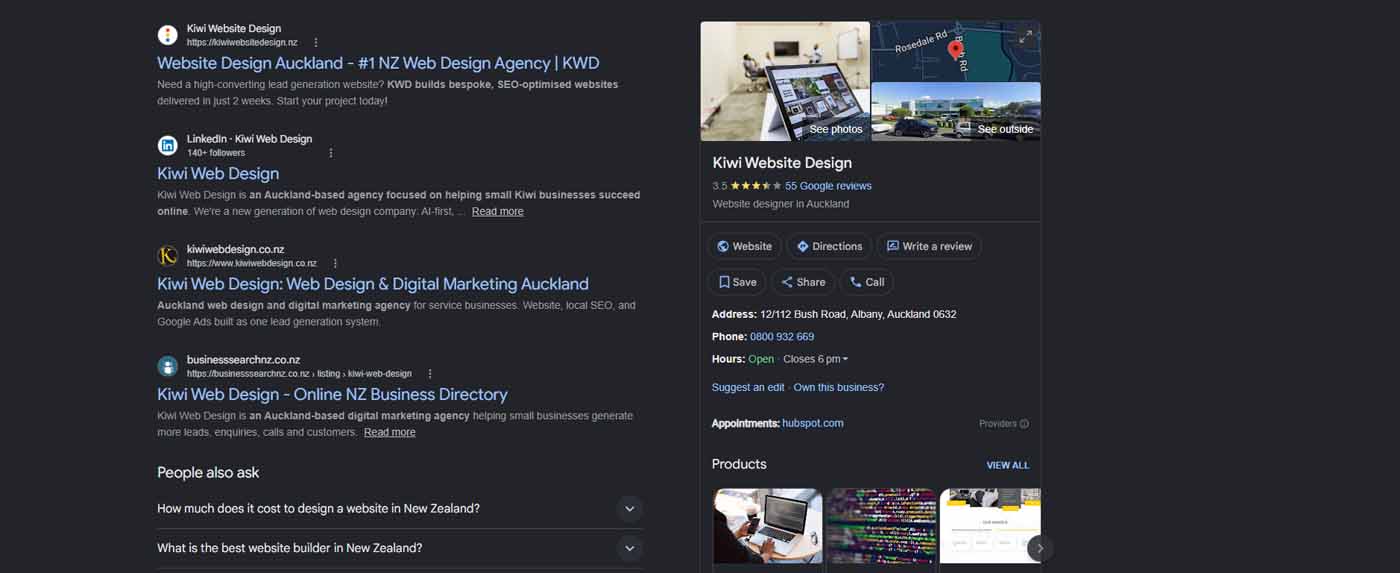
A Papakura plumber rang us a while back with a fair complaint. His listing was showing up in the map results, he had the call data to prove it, and the phone still was not ringing the way it should have been. We looked at the profile, then the site, and the problem took about four minutes to find.
His profile listed gasfitting, hot water cylinders and drainage. His website had one page called Services with a short paragraph on each. So somebody who tapped through wanting a cylinder replaced in Papakura landed on a page that could have belonged to any plumber in the country. Google had done the hard part. The website threw it away.
Two systems, one decision
People treat the profile and the website as separate jobs, usually because different people set them up. Google does not see it that way and neither does the customer. The profile is where they find you and form a first impression. The website is where they decide whether to hand over their name and number.
That means the two have to agree. Same trading name, same phone number, same address format, same list of the work you take on. If your profile says roof repairs and your site only talks about full replacements, you have created doubt at the exact moment someone was ready to act.
What the profile is judged on
Local rankings sit on three rough pillars. How close you are to the searcher, how well your profile matches what they typed, and how much of a presence you have overall. You cannot move your workshop. You can control the other two.
The categories carry a lot of weight and most owners underestimate them. A primary category of “Electrician” behaves differently from “Electrical installation service”, and picking the one your customers would use beats picking the one that sounds most impressive. Then the services list, the description, and real photos of your work, your vans and your team. Stock imagery gets skipped by people and does nothing for you.
Reviews carry weight too, though volume alone is not the point. Reviews that mention the job and the suburb are doing quiet keyword work for you, so it is worth asking customers what they were happy with rather than asking for five stars.
Where the website has to take over
Here is the part that gets skipped. Every service you list on your profile deserves somewhere real to send people. An anchor link halfway down a general page will not do it. What works is a page that covers the job properly, with prices or price ranges where you can give them, an idea of timeframes, and photos of work you have done.
Same for the areas you cover. If you have set a service area of half of Auckland, a visitor from Pukekohe needs to see Pukekohe somewhere on the site before they believe you come out that far. We have written before about creating location pages that rank without sounding duplicated, because a thin suburb page can cost you the ranking you were chasing.
The mechanics have to hold up as well. Most map pack traffic is on a phone, often outdoors, often on patchy coverage. A slow page loses the enquiry before anyone reads a word of it, which is why we keep coming back to why website speed affects both rankings and conversions.
Reviews get read twice
Something worth knowing about how people behave here. They read your reviews on Google, then they land on your site and look for the same proof again. If the site has nothing, the trust dips slightly. Not enough for them to leave, but enough for them to keep the tab open and go and look at the next result.
Pulling a handful of real reviews onto your homepage and service pages closes that loop. Project photos do the same job even better, since a finished job in a street they recognise lands better than any paragraph you could write. Our website design work is built around exactly that kind of proof.
A ten minute check you can do today
Open your profile on your phone. Read your categories and your service list out loud. Now open your website and try to find a page that answers each one properly. Count how many you cannot find.
That number is usually where the missing enquiries have been going. If it is three or four, the fix is structural rather than cosmetic, and it is the kind of thing our SEO work in Auckland starts with.
Get the profile and the site telling the same story and the enquiries stop leaking. Give us a call if you want a second pair of eyes on yours.
Comments are closed.