



What Your Contact Details Are Costing You
We had a client last year, a Kumeu landscaper, who could not work out why enquiries had dried up despite steady traffic. His analytics looked healthy. His rankings had barely moved. We pulled up his site on a phone, the way most of his customers would, and found his listed hours were three years out of date and his phone number was an image rather than text, so nobody could tap to call.
Nobody had looked at that section in years. It is the part of a website every business builds once and then forgets, right up until someone points out it has been quietly turning people away.
The last page before someone becomes a customer
Every earlier decision on a site, the homepage, the service breakdowns, the reviews, exists to get someone to this point. By the time a visitor reaches your contact details, they have already decided you might be the right business. What happens next is either a phone call or a tab closed and forgotten.
That is a heavier job than most owners give it credit for, and it explains why fixing it tends to move enquiry numbers faster than almost anything else we touch.
Wrong hours cost you the call
We still see this constantly. Hours copied from a Facebook profile set up in 2019, never updated when trading changed. A customer checking at 7pm on a Tuesday, seeing “closed”, and ringing the next business on the list instead.
If your hours vary by season or you take calls outside standard trading, say so plainly. “Phone lines open until 6pm, on-call for urgent work after hours” tells someone exactly what to expect, and stops them assuming you are unreachable when you are not.
A form is not a phone number
Forms have their place, particularly for detailed quote requests where someone needs to attach photos or describe a job properly. But a form-only setup filters out the customer who wants an answer in the next five minutes, and that customer often has cash ready to spend.
We build most trade and service clients a direct number, click to call on mobile, sitting above any form rather than buried beneath it. If a form is the only path to reach you, that is worth revisiting before anything else on this list.
Asking for too much, too soon
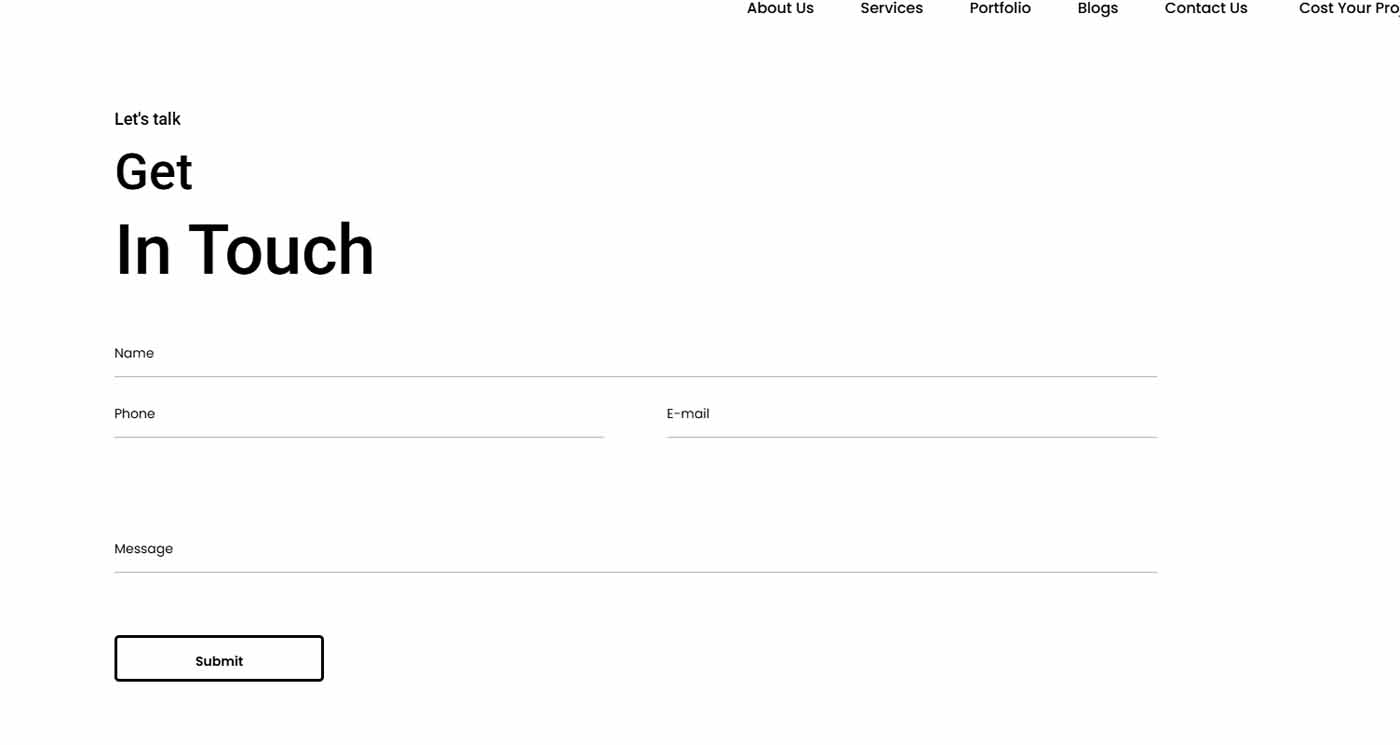
The forms that convert worst are the ones asking for a job description, budget range, preferred date and photo upload before someone has even decided whether to trust you. Every extra field is a small excuse to abandon the enquiry.
Name, number, a one line description of the job. That is usually enough to start a conversation. The detailed questions can wait for the phone call or the quote, once someone has already committed to reaching out.
Set the expectation, then meet it
Silence after someone submits an enquiry creates doubt fast. Did it send? Did anyone see it? Should I just call someone else? A short confirmation, whether that is an automatic email or a note on screen saying “we will call you back within one business day”, removes that doubt immediately.
Then the harder part. Meeting it. We have watched clients lift their close rate simply by getting faster and more consistent about calling enquiries back, without changing a single word of copy. Our piece on turning more website visitors into phone calls goes into how that response window affects whether someone becomes a customer at all.
Answer the question before it gets asked
A lot of people who never fill in a form are not lost causes. They are people with a small question, do you cover their suburb, how soon can you start, do you charge a call out fee, and they leave the moment that question goes unanswered. A short, honest set of answers sitting near your contact details closes that gap. We wrote about this properly in why clear FAQs help before customers enquire, because it solves a different problem to the contact details themselves but sits right alongside it.
What we would check on yours
Open your site on your phone. Tap the number. Read the hours out loud and ask whether they are still true. Count the fields on your form. Look for anything that tells someone what happens after they hit submit.
If two or three of those come up short, you are likely losing enquiries you never see in any report, because a person who gives up before submitting a form leaves no trace in your analytics. It shows up only as traffic that never turns into an actual enquiry, which is usually where this conversation starts for our clients.
We handle this as part of every custom website build we take on, because a beautifully designed site with a weak final step still loses the job to a plainer competitor who makes it easy to get in touch. Get in touch with us and we will run through yours together.
Comments are closed.