



Why Your Website Gets Traffic But No Enquiries
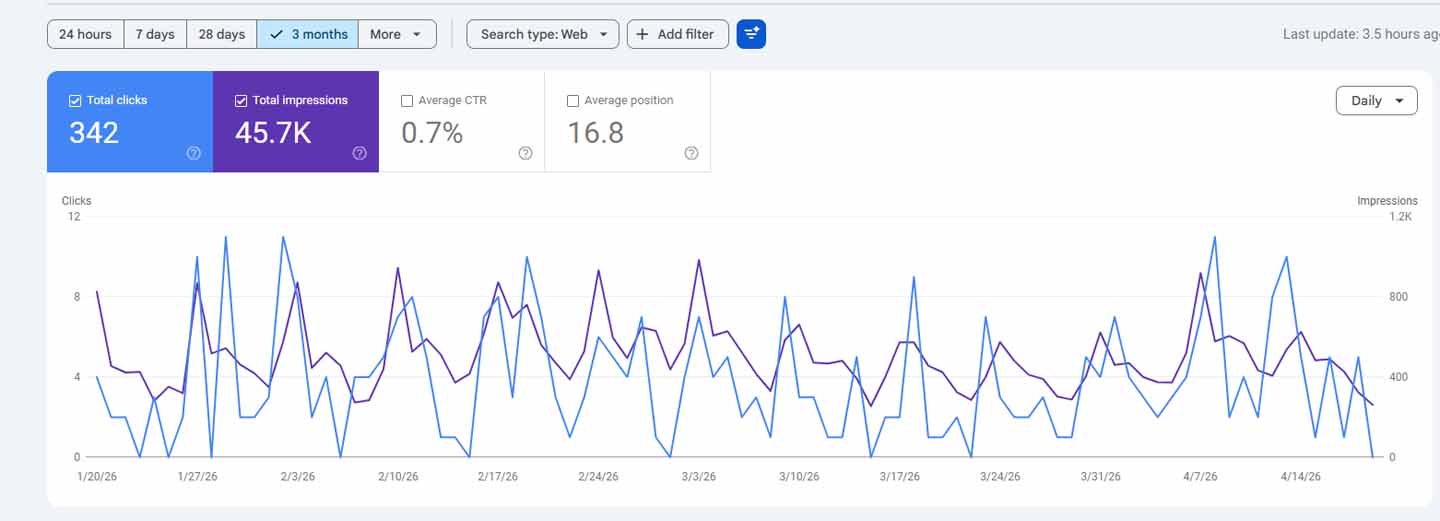
You open Analytics, see people landing on the site, and assume things are heading in the right direction. However, the phone stays quiet. The quote forms do not come through. The inbox does not move. That is when reality kicks in.
Traffic without enquiries is not a win.
For a lot of businesses, especially tradies, service businesses, and owner-operated companies, that gap is where the real problem sits. The site may rank. It may get clicks. It may even bring in decent traffic from Google. But if it is not turning visits into calls, sales, or quote requests, something is off.
I see this with Auckland and Wellington businesses all the time. They think the hard part was getting found. In reality, getting found is only half the job. The website then has to convert the right person at the right moment.
Why Traffic Alone Is Misleading
Traffic is a vanity metric when you look at it in isolation.
A hundred people landing on your site means very little if they are not the right people, or if the site gives them no reason to act. A local roofing company does not need thousands of blog readers who were casually searching for general advice. It needs qualified visitors who are actually looking for help, pricing, or a contractor they can trust.
This is where many business owners get stuck. They assume traffic equals progress. But a site can attract visitors and still fail commercially. What matters is what those visitors do next.
Do they call?
Do they request a quote?
Do they fill out a form?
Do they actually want what you sell?
If the answer is no, then the traffic is not doing the job.
You May Be Attracting The Wrong Traffic
This is one of the biggest reasons websites underperform.
Sometimes the site ranks for broad keywords that do not match buying intent. Sometimes the blog content pulls in people looking for information, but the site is weak at moving them towards a service enquiry. Sometimes the SEO has been built around volume rather than relevance.
For example, a painter in Christchurch may rank for broad decorating advice but struggle to rank for the terms that actually lead to booked work. An ecommerce store may get traffic from comparison searches while product and collection content remains weak. A service business may be bringing in visitors from outside its service area.
Traffic is only useful when it matches intent.
That is also why internal structure matters. If someone lands on an article and there is no clear pathway into the key commercial parts of the site, you lose them. Our article on internal links and how they help SEO touches on this from a ranking angle, but it matters for conversions as well. Visitors need a logical next step, not a dead end.
Weak Messaging Kills Momentum
A lot of websites lose enquiries because the offer is not clear enough.
Business owners are often too close to what they do. They know their own value, their own process, and their own industry. The problem is the site usually assumes the visitor knows it too. They do not.
If someone lands on your homepage or a key service section, they should quickly understand:
- what you do
- who you do it for
- where you work
- why they should trust you
- what they should do next
If the message is vague, generic, or over-polished, people hesitate. That hesitation costs you leads.
This is also where custom website design becomes important. A generic layout with generic wording often creates a generic result. If the site has not been shaped around your audience, your services, and your real conversion points, it is much harder to get consistent enquiries from it.
Poor CTAs And User Flow Create Friction
A lot of websites simply do not ask for the enquiry strong enough.
The call to action is buried. The button says something weak. The form is too long. The layout forces people to scroll too far before they understand what to do. The navigation does not help them move where they need to go. Everything feels just slightly harder than it should.
That friction adds up.
A high-performing website should guide people. It should not leave them to figure things out alone. This is one reason I keep coming back to the same point: design and structure are commercial tools, not visual decoration. If the user flow is poor, traffic will leak out of the site before it has any chance to convert.
That is part of the reason blogs like Why Your Website Isn’t Generating Leads, And How to Fix It continue to matter. Many of the same problems apply here, but with one key twist: the traffic is already there. The issue is what happens after the click.
Trust Gaps Hurt Conversion Fast
This one gets overlooked all the time.
A business owner may feel their work speaks for itself. A website visitor does not have that context. They are making a quick judgment based on what they can see. If there are no reviews, no case studies, no strong proof of work, no clear service detail, and no reason to believe you are the right option, they leave.
Trust gaps kill enquiries.
For NZ service businesses, this is especially important because buyers often compare several options before contacting anyone. If your site feels thin, vague, or unproven, the visitor may click away and go with someone who looks easier to trust.
This is also where speed and usability matter. A clunky site feels less credible. A slow site feels neglected. A site that loads poorly on mobile makes the business feel disorganised. Our article on why website speed matters for SEO and conversions explains that side clearly. Performance is not only technical. It affects trust.
How To Fix Conversion Issues Properly
The fix is usually not one dramatic change. It is a series of smart corrections.
Start with the traffic itself. Check whether it matches the kind of customer you actually want. If it does not, your SEO and content targeting may need work.
Then look at your key landing points. Is the message clear? Is the offer obvious? Does the layout move people forward, or does it leave them wandering?
Check the call to action. Is it direct? Is it visible early enough? Does it feel natural to click?
Then review trust. Do you have proof? Do you show real work? Do you sound like a real business, or like a generic template?
Finally, look at the technical side. Is the site fast? Mobile-friendly? Easy to navigate? Built in a way that supports both traffic and conversion? This is often where website design needs to be looked at properly, because the structure underneath the site can be just as important as the words on top of it.
Traffic Means Very Little Without Action
This is the blunt version.
If your site gets traffic but does not generate enquiries, it is underperforming. That does not mean the traffic has no value. It means the website is failing to turn that traffic into something commercially useful.
That gap can usually be fixed. But it needs a proper look at traffic quality, messaging, trust, flow, and technical performance. Once those pieces line up, traffic starts to matter again.
Because then it becomes what it should have been in the first place: a route to better leads, better enquiries, and better work.
Comments are closed.